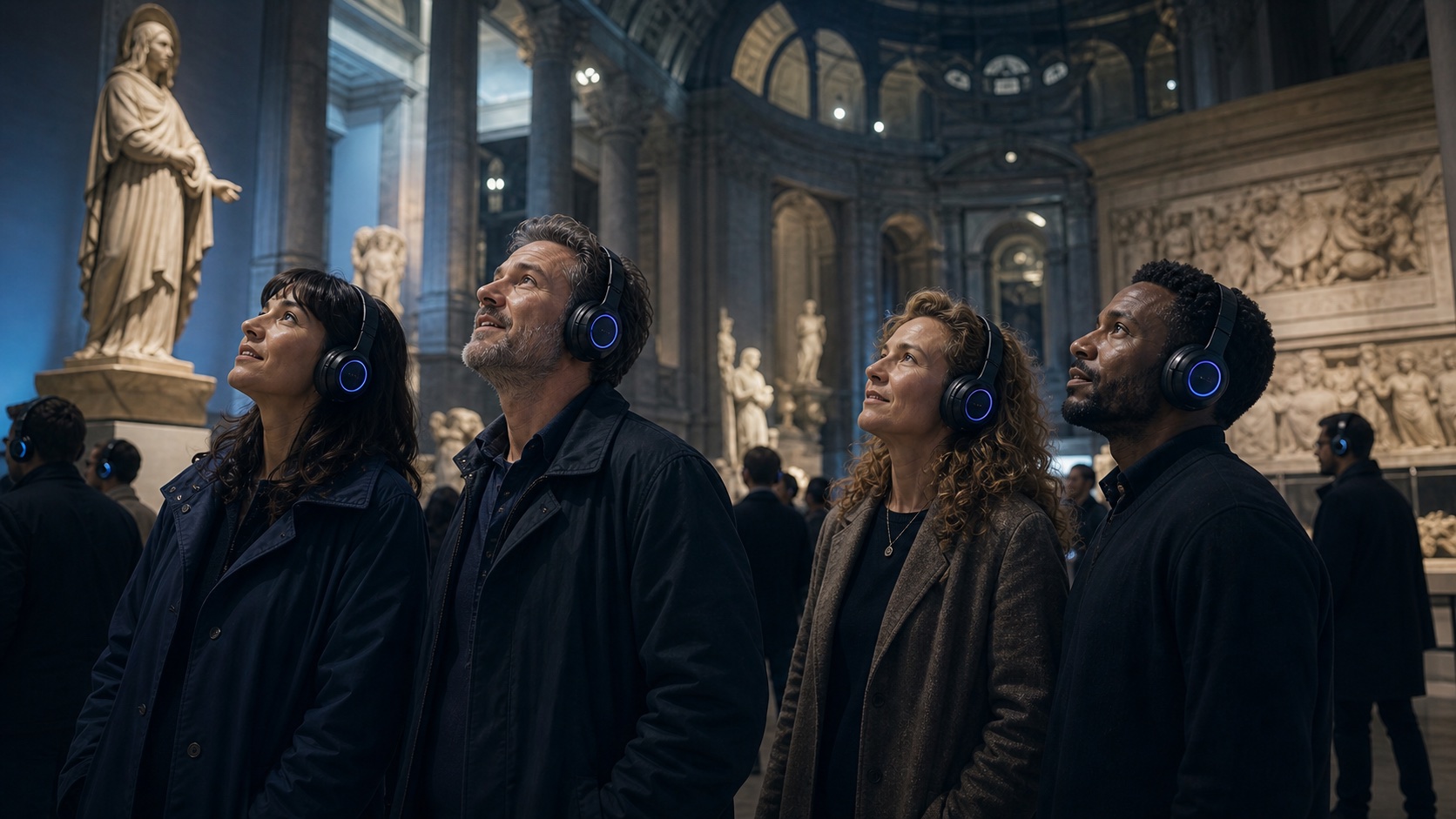
A small group of museum visitors wearing matching headphones looks up together in a gallery.

About Weave

We make real-world places feel newly alive.

Weave exists for moments when people look up together, notice something they would have missed alone, and feel the place around them become part of the story.

We believe sound, movement, play, and shared attention can help museums, events, venues, campuses, and learning environments become more present, social, and memorable.

Explore Services & Technology

We are a creative technology company for social, place-based experiences.
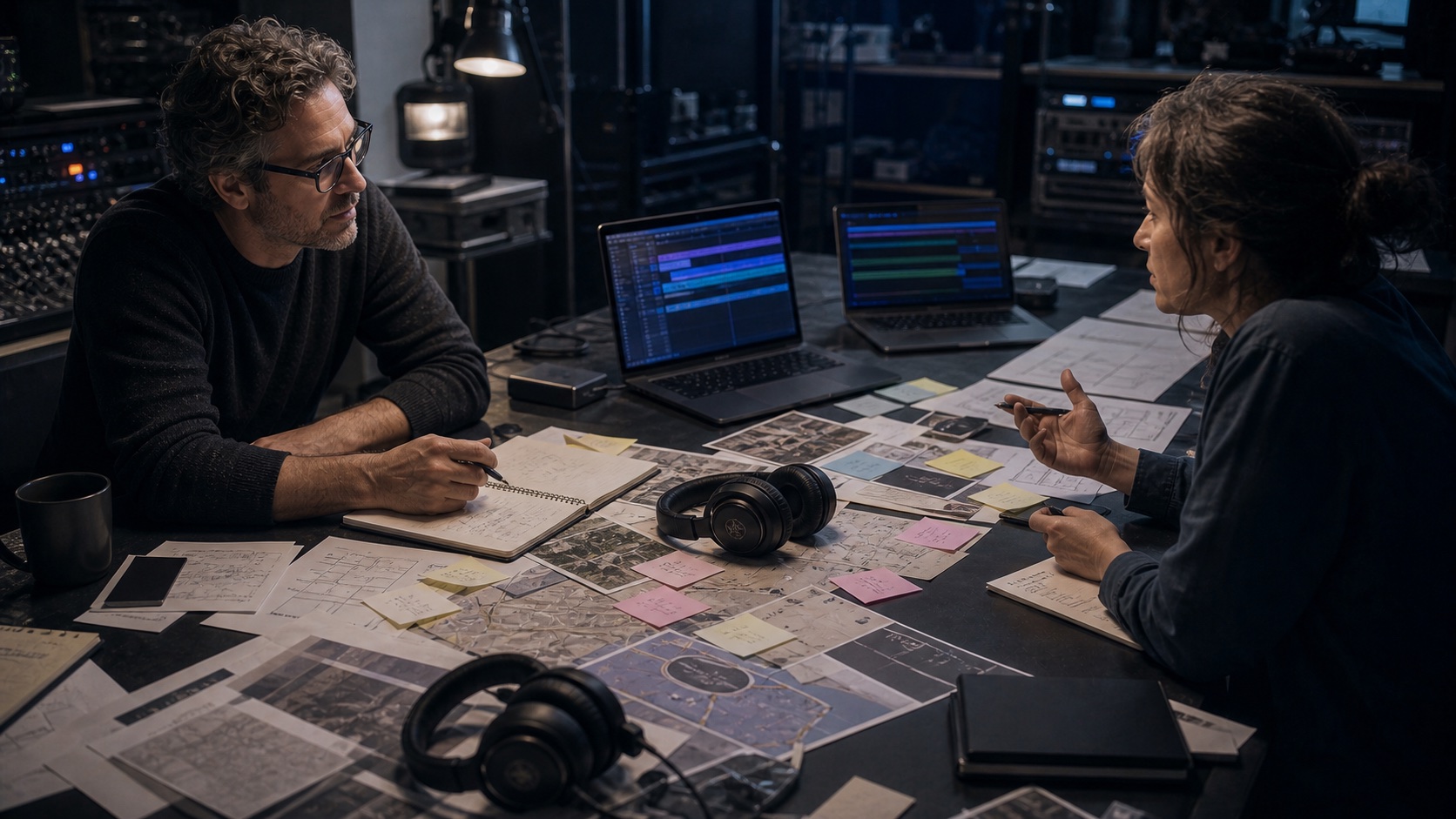
Two designers discussing route maps, floor plans, headphones, and timing cues at a workshop table.

Weave is built for organizations that want people to do more than consume content. We help cultural destinations, museums, event teams, training groups, campuses, attractions, and immersive venues turn physical places into shared journeys.

Our point of view is simple: the experience is not the app, the headphones, or the hardware. The experience is what happens between people, story, sound, and place. Technology should support that moment without becoming the center of attention.

We are drawn to work that feels thoughtful, participatory, emotionally clear, and operationally real. A Weave experience should feel designed, not gimmicky; social, not forced; and memorable because it helps people notice and share something that matters.
Shared attention is becoming rare. We design for it on purpose.

A small group of museum visitors wearing matching headphones looks up together in a gallery.

Many guest experiences quietly separate people. One person reads a label, another checks a phone, someone else moves ahead, and the group stops having the same moment.

Weave is designed around shared attention. Sound can guide a group without making them stare at a screen. A prompt can make someone look closer. A timed reveal can give people a reason to turn to each other. A role, clue, or choice can make participation feel natural instead of performative.

The emotional value is not just information delivered more efficiently. It is the feeling that everyone was inside the same unfolding moment.

The best technology gives people confidence without asking for attention.

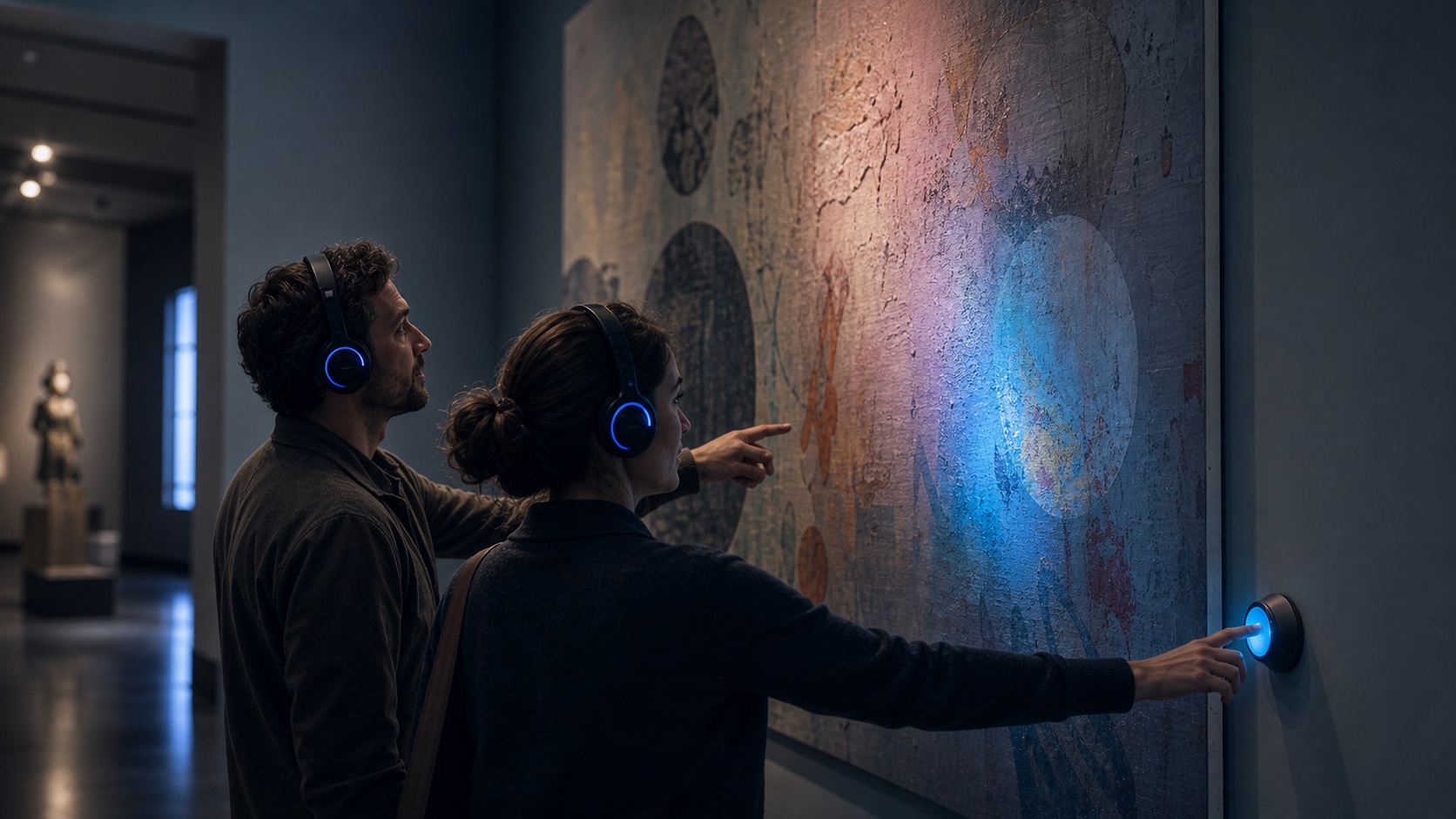
Two museum guests wearing matching headphones interact with a blue wall button beside an abstract painting.

We are not interested in technology that competes with the place. We are interested in technology that makes timing, coordination, responsiveness, and surprise possible while guests stay present in the real world.

That means we design for the feeling first. Guests should feel oriented, invited, and connected. Operators should feel that the experience is reliable enough to run. The machinery behind that can be sophisticated, but it should not be the headline.

We are careful about screens, game mechanics, automation, and novelty. If a tool helps people listen, move, notice, collaborate, or remember, it belongs. If it only adds friction or spectacle, it does not.

Not an app. Not a passive audio guide. Not a generic interactive template.

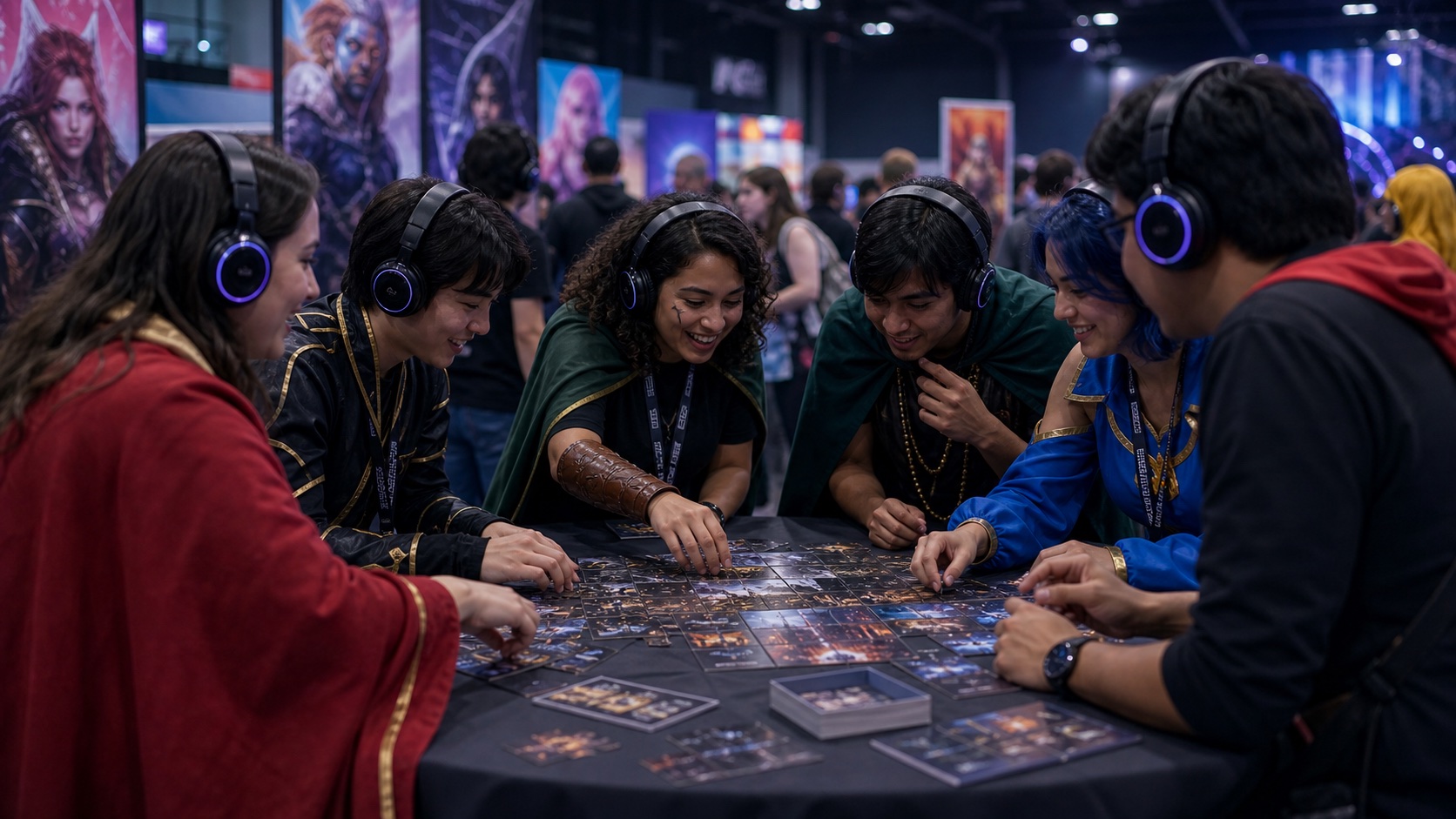
Convention attendees wearing matching headphones laugh together during a collaborative team exercise.

Built for the room, not the screen

The physical environment is the main interface. We use audio and prompts to send attention outward, not downward.

Social by default

We design for groups, pairs, teams, families, classes, and audiences who should have reasons to compare, coordinate, laugh, decide, and remember together.

Play with restraint

Game-inspired design can create energy and agency, but it has to serve the story, audience, and place.

Custom to the institution

Museums, venues, events, and training programs each have their own tone, constraints, audience needs, and operational realities.

Designed for memory

Sound, place, motion, surprise, and shared emotion make experiences easier to talk about after they end.

Human before technical

We care about clarity, pacing, welcome, access, taste, and the social texture of the moment before we care about features.

Design Principles

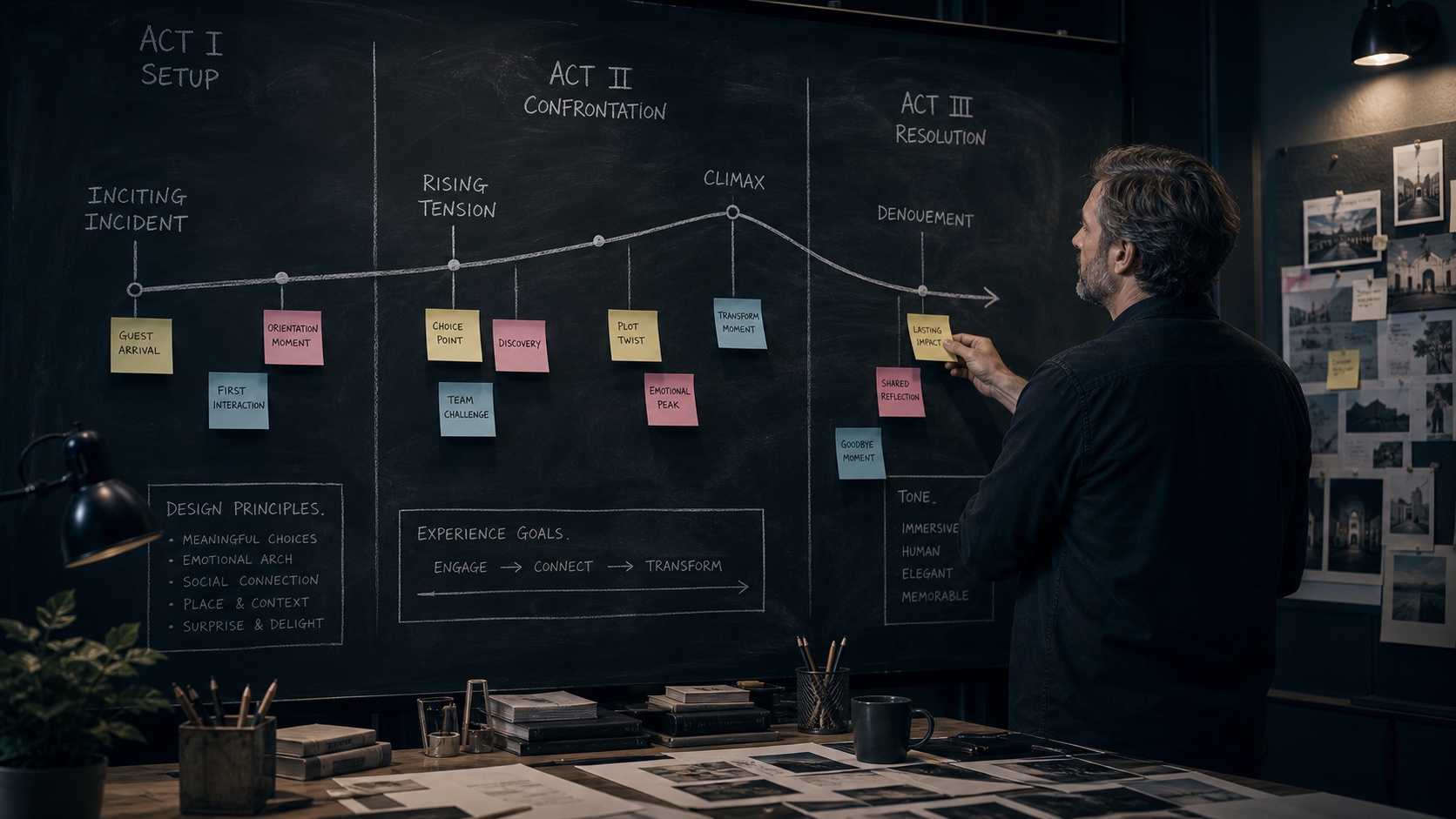
A designer adds a post-it note to a blackboard story flow chart in three acts.

Presence over novelty

A good experience makes the real world feel more vivid, not more cluttered.

Participation with purpose

Every action should help guests understand, connect, decide, discover, or remember.

Clarity is hospitality

Instructions, timing, pacing, and onboarding should reduce anxiety and help people feel invited.

Accessibility belongs early

Mobility, hearing, language, cognitive load, and alternate participation paths shape the creative idea from the start.

The place has authorship

Routes, objects, architecture, acoustics, staff flow, and atmosphere are part of the design material.

Technology should earn its keep

If a feature does not improve the human experience or operational confidence, it should be simplified or removed.

Want to see how this becomes a real project?

Review the services, deliverables, and technology that turn Weave’s point of view into a launchable experience.

Explore Services & Technology